The Chair Someone Else Warms: A Show Day With a West End Dep
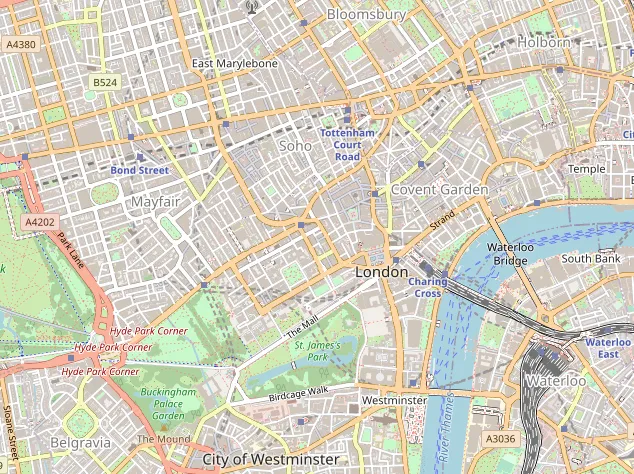
Photo: Jenny Wren 64, CC BY-SA 4.0, via Wikimedia Commons
At 1.40pm on a damp Tuesday in November 2026, a text lands in the pocket of a freelance musician on a bus heading east. It is not a glamorous summons. It is a fixer asking whether she can cover a West End chair that night: a dep, short for deputy, stepping into a pit band that has been playing the same score eight times a week for months. She reads it twice, checks the show, checks the tube, checks whether her bassoon reed case is in the flat or still in the boot of her car. Then she replies: yes.
That is how it begins. Not with a grand audition, but with a yes sent from the top deck of a bus.
The call comes sideways
Most people outside the industry assume the person in the pit is the person who was hired for the run. Often they are. But the West End runs on cover: swings on stage, stand-ins in lead roles and deps in the band. A dep might be booked weeks ahead for a holiday, or called at nine bars' notice because someone has gone down with a stomach bug, a family emergency or a wrist that has finally said enough.
The musician I follow — let's call her Ruth — has depped across London for more than a decade. She plays several instruments, reads like a demon and has the particular temperament of someone who is calm in rooms where everyone else is quietly counting. 'The job is not just playing the notes,' she says, once she is off the bus and walking briskly towards the theatre. 'It's playing the notes in the right room, at the right volume, with the right person breathing down your neck.'
The book is not the score
The first stop is not the stage door but a café table nearby, where Ruth opens the pit book. A published score is one thing. A West End book is another: a living document covered in pencil marks, sticky tabs, cuts, vamps, tempo notes and warnings in three different hands. Some marks are practical. Some are superstition. Some are the accumulated memory of every near-miss since previews.
She reads it the way a second engineer reads a manual before a shift: not to learn everything, but to find the places where this particular band has agreed to be strange. 'There's a cut here that isn't in the score,' she says, tapping a page. 'There's a repeat here that only exists because the MD likes it. And there's a two-bar hold in the finale that is not written down anywhere. You learn that by watching the conductor's left hand and by asking the person next to you, very politely, what on earth happens there.'
The shorthand is its own language. A squiggle means watch. A circled bar means don't watch — count. A tiny cross means the conductor will mouth something rude if you come in early. Ruth pencils in her own notes in a different colour so she can tell her thinking from the band's history. By 3.15pm, the book looks less like music and more like a map of a small, anxious country.
Learning the room, not just the notes
The afternoon is not a full rehearsal. It is a chance to sit in the pit, meet the band, check the monitor mix and work out the geography of the chair. Where is the page turn? Where is the mute? Where is the water bottle that must not be knocked over during the quiet bit? In a West End pit, physical logistics are half the performance.
Ruth is introduced around. Nobody makes a fuss. The principal second violin gives her a nod and a useful piece of information about the conductor's beat pattern in the second act. The drummer tells her where the click is loudest. The MD — musical director — shakes her hand and says, 'Just hang on to us. If you get lost, look at me and I'll get you out.' It is the most reassuring sentence in theatre.
There is also etiquette. Don't apologise too much. Don't over-explain. Don't ask the band to change anything for you. Don't treat the pit as a competition. And, crucially, don't pretend you know the unwritten bits when you don't. 'The worst thing a dep can do,' Ruth says, 'is bluff. Everyone would rather you ask than watch you guess.'
Half-hour, then the dark
By 6.30pm, the theatre is filling. Ruth is in the pit with her instrument warm, her book open and her phone off. The half-hour call is not a countdown to panic; it is a countdown to focus. The band tunes, chats in low voices, checks the set list that never changes. Some read. Some do stretches. Some stare into the middle distance like people about to run a race they have run a thousand times.
Then the audience settles, the lights go down and the overture begins. From the outside, it looks seamless. From the pit, it is a sequence of small negotiations: follow the conductor, follow the band, follow the show. Ruth is not trying to be invisible. She is trying to be correct. There is a difference. Invisible is a side effect of doing the job well.
The interval is the real exam
The interval is when the quiet panic check happens. Not the dramatic kind — no one is running down corridors — but the professional kind. Ruth finds the MD, confirms a tempo in the second half, checks a cut that felt different from the afternoon notes, and asks the person beside her whether the fermata before the finale always lasts that long. It does. She marks it again.
There is also the human check. How is the band? Is anyone struggling? Does the principal need a moment? A dep is a guest, but a good dep is also a colleague. The safety net only works if everyone treats it as a shared system rather than a favour. 'You can tell a lot about a show from how it treats its deps,' Ruth says. 'If the band is generous, the show is usually healthy. If they're territorial, everyone suffers.'
The safety net has a cost
The second half passes without incident, which is the highest compliment a dep can receive. After the curtain call, there are quiet thank-yous, a quick pack-down and a walk to the tube. Ruth will be back on another show later in the week, possibly with a different book and a different set of pencil marks. The work is invisible by design, but it is not free. It relies on fair fees, decent notice and a culture that values the person who says yes from the bus.
As theatregoers, we rarely think about the chair behind the chair. We think about the star, the song, the standing ovation. But the West End is held up by people who can learn a room in an afternoon and disappear into it by curtain. The dep is not the understudy of the pit. She is the reason the pit can afford to be human.
On the bus home, Ruth gets another text. Another show, another chair, another yes. She puts her phone away and watches the city go past. Tomorrow there will be different pencil marks. Tonight, the band was safe.