The Accent Is the Easy Bit: How UK Dialect Coaches Defend Regional Truth

The first thing a good dialect coach does is not teach an accent. It is listen for the accent the actor is already carrying. The default one. The one that slips in when they are tired, or excited, or trying to sound clever. In a rehearsal room in Salford on a grey Tuesday in 2026, a London actor is working on a Geordie role and the coach has asked them to say the line again, but this time as if they are explaining something to a mate in a queue. No demonstration. No ‘listen and repeat’. Just a small shift of intention, and suddenly the vowel has somewhere to live.
That is the job in miniature. Not just the accent. The truth underneath it.
The First Pass Is Listening
Dialect coaches are often imagined as human tape recorders: give them a script, they give you a sound. The reality is closer to dramaturgy with a linguistics degree. Before a single sound is drilled, the coach maps the character’s world. Where were they born? Where did they go to school? Did they move at eighteen and spend twenty years sanding the edges off? Do they code-switch when they talk to their mum? Are they trying to sound posher than they are, or rougher, or younger, or less afraid?
A period drama is a good test. It is easy to flatten every voice into a kind of posh-neutral museum piece, all clipped consonants and no weather in the mouth. A decent coach pushes back. Regional truth is not a costume detail. It is evidence of class, geography, education, migration and money. If a character has never left a Yorkshire valley, they should not sound like they keep a flat in Chelsea. If they have left, the accent should carry the journey.
That work starts with research, but not the lazy kind. Coaches build playlists, yes. They collect recordings, oral histories, local radio, family videos, old interviews. They read novels set in the region and listen to how people argue, apologise and order a pint. Then they throw most of it away, because an accent is not a playlist. It is a set of habits. The actor has to make those habits feel like their own.
More Than a Spotify Playlist
In the room, the coach might spend an hour on one consonant. Not because the audience will notice the consonant, but because the actor will notice themselves noticing it. That is the trap. The moment a performer starts performing the accent, the audience leans back. They can hear the work. It is like watching someone drive a car while thinking about the clutch.
The trick is to give the actor something physical to do. A rhythm. A placement. A tiny bit of mouth geography. Then distract them with the scene. ‘Forget the accent,’ the coach will say. ‘You are late and you are lying to your sister.’ The accent arrives on the back of the intention. That is why dialect coaching is so often mistaken for therapy. It is not, but it is intimate. You are asking an adult to change the sound of their own voice in front of a stranger, and then do it again while pretending to be someone else.
The Politics in the Vowel
Here is where the UK gets interesting. Accent is never just accent. It is class, region, school, postcode, and a hundred years of who got to sound authoritative on television. The coach is often in the room when an actor discovers that their own natural voice has been treated as a problem. Maybe they were told at drama school to ‘lose’ their accent. Maybe they have spent years auditioning for roles that wanted ‘neutral’ and meant ‘southern’. Maybe they are from a region that still gets flattened into comedy by lazy casting.
A good coach does not pretend this history is not there. They name it. They talk about accent bias the way a fight director talks about safety: as something you manage, not something you ignore. The goal is not to replace one accent with another. It is to give the actor a choice. A working-class actor should not have to sound middle-class to play a lawyer. A middle-class actor should not get to sound ‘authentic’ by doing a generic northern mush. Regional truth is not a vibe. It is a craft.
Room Etiquette, or How to Correct Without Correcting
There is a particular etiquette to dialect work. You do not correct an actor in front of the whole company unless they have asked you to. You do not make a note sound like a judgement. You do not say ‘that’s wrong’ when you mean ‘that’s a different place’. You say, ‘That’s more Liverpool than Manchester — let’s pull it back.’ You say, ‘That vowel is doing something interesting, but not for this character.’ You keep the actor’s dignity intact, because the voice is close to the self. Closer than a costume. Closer than a wig.
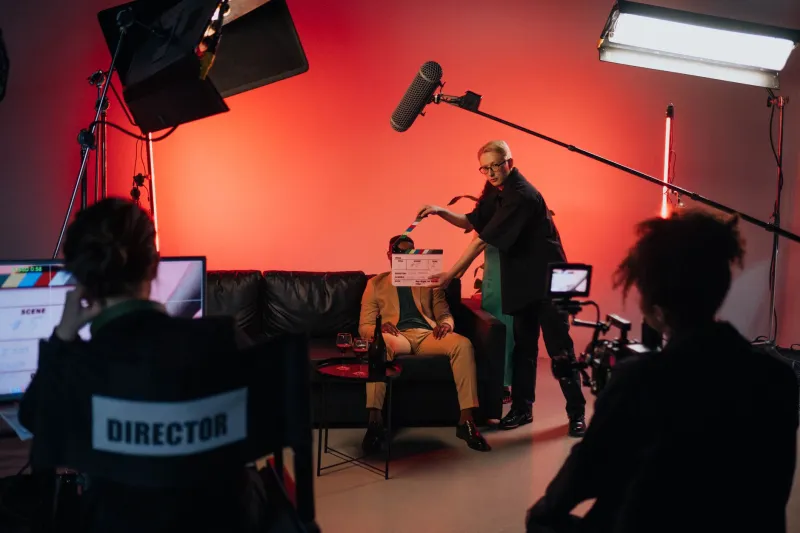
The coach is also a translator between departments. Directors want clarity. Sound designers want consistency. Producers want the schedule to hold. Actors want to feel safe. A dialect coach has to hold all of that without becoming the accent police. On a film set, the work gets smaller and faster. The coach might stand just out of frame, script in hand, giving a thumbs-up or a tiny hand signal. They might whisper a reminder between takes. They might spend six hours waiting to say four words. That is the job. Invisible, patient, alert.
Why You Shouldn’t Hear the Work
If the audience leaves talking about the accent, something has gone slightly wrong. The best dialect work is not a showreel. It is a kind of negative space. You believe the character comes from somewhere. You believe the voice belongs to the body. You do not think about the coach at all.
That is why the fight for regional truth matters beyond representation. It makes stories better. It makes class visible without turning it into a punchline. It lets a Geordie character be funny without being a joke, a Belfast character be tender without being a Troubles metaphor, a Black Country character be clever without the accent doing the heavy lifting. It gives actors more room to be people rather than types.
So no, it is not just the accent. It is the right to sound like you are from somewhere. In a UK industry still addicted to posh-neutral, that is not a small thing. It is the whole point.