The Face Isn’t the Job: A Day With the UK Stand-In Who Makes the Lead Look Right
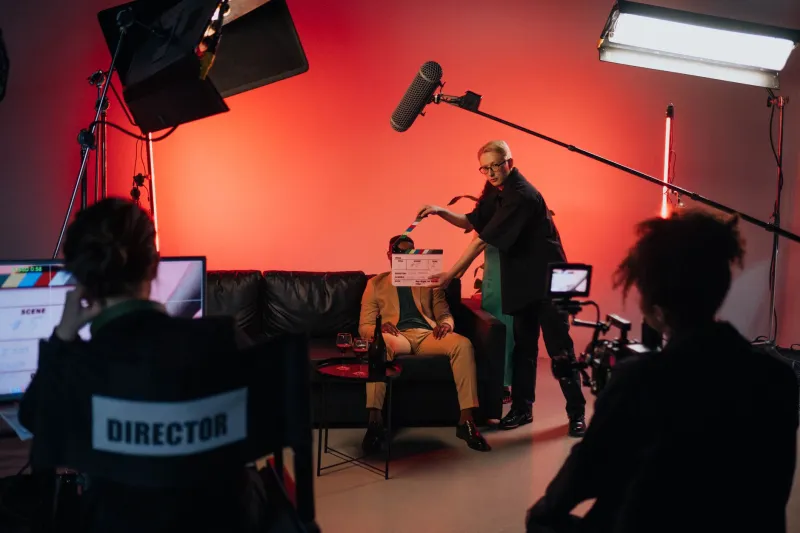
On a damp November morning at a studio in Hertfordshire, Priya is standing in a pool of light while three people discuss a lamp. She is wearing neutral clothes, no makeup that will read on camera, and a pair of trainers chosen because the lead actor wears something similar. The director of photography asks her to turn slightly left. She does. The focus puller calls a mark. She holds. Nobody asks her to act.
That is the job.
Priya is a stand-in. By the time the lead performer arrives, she will have walked their path, sat in their chair, stood at their eyeline and helped the crew decide where the camera, the light and the boom should live. For a few hours, she is the shape of a person. Then the person turns up and she steps away.
Call sheet, not red carpet
Her day began at 7am. The lead was called for 8.30. In between, Priya stood on a taped cross while a gaffer shifted a softbox and a camera operator checked a frame. She raised one hand to simulate holding a phone. She walked from a fake doorway to a fake kitchen counter four times so the steadicam operator could find a rhythm. She sat while a costume assistant checked whether a jacket sleeve would catch the light.
‘We’re human Post-it notes,’ she says later, during a break. ‘You’re not there to be interesting. You’re there to make the frame work before the person who is interesting arrives.’
That distinction matters. A stand-in is a technical presence. They are booked for height, colouring, hair, build and sometimes a specific physicality, so the crew can set focus and lighting without asking the lead to sit through another twenty minutes of tweaking. It is not glamorous. It is also not accidental. A good stand-in saves a production time, and time on a UK set is money, patience and daylight.
Standing in, standing for, and taking the fall
The language around doubles gets messy in press coverage. On set, the roles are usually distinct.
A stand-in stands in for the lead during technical setup. A body double stands in for them in front of camera, often when the face is not the point: a walk away, a hand on a door, a back in a wide shot, a reflection in a window. A photo double does the same for stills. A stunt double is a trained stunt performer, usually from a different department, and does not appreciate being confused with someone who has been asked to match a gait.
‘Sometimes one person covers more than one role, and that should be reflected in the contract,’ says Lena, a casting director who works across UK television and commercials. ‘But the request is usually specific. A stand-in might need to be within a few inches of the lead’s height and have similar skin tone and hair. A body double might need to match a costume, a walk or a particular gesture. A stunt double needs a whole different skill set and safety training.’
In 2026, that clarity is still patchy. Equity, the UK performers’ union, has long argued for fair contracts, clear hours and proper recognition for stand-ins and doubles. Some productions credit them in the end crawl. Many still do not. Rates vary by budget and duration, and the work can be booked through agents, specialist agencies or a quiet word from a production manager who remembers you were reliable.
Marking, matching and the art of almost
By 9.40, the lead has arrived. Priya hands over the mark, the eyeline and a small pile of observations: the left hand usually holds the cup, the coat gets shrugged off before the second line, the walk has a slight favour on the right leg. Then she sits out of frame, watching.
After lunch comes a pickup. The lead is needed on another set, so Priya is asked to walk the same route for a wide shot: door, path, car. She puts on the same coat, the same shoes, the same bag. The camera is thirty metres away. The director watches playback. ‘Again, but less bounce.’ She does it again. And again.
It is not acting. It is not nothing either. It is applied observation, a kind of physical admin that keeps a scene coherent when the star is elsewhere. Body doubles often talk about matching a gait the way a musician talks about keeping time. You watch how someone puts their weight down. You notice whether they lead with the shoulder or the chin. You learn that a famous walk is often just a slightly stubborn knee.
Continuity is a social skill
Stand-ins keep their own notes. Not the script supervisor’s bible, but a private shorthand: which hand holds the coffee, how the lead shrugs, the exact angle of a cap, whether the phone goes in the left pocket or the right. They also learn etiquette. Do not offer unsolicited notes on the performance. Do not post set snaps. Do not block the monitor. Do not ask the lead for a selfie while they are trying to find an emotional beat.
‘You are a guest in someone else’s close-up,’ says Marcus, a body double who has worked on BBC dramas and a major streaming film. ‘The best compliment is that nobody notices you’ve been there all day.’
Recognition, when it comes, is odd. A body double might be spotted by a friend who recognises their walk in a trailer. A photo double’s hand might end up in a poster, ring and all. Priya once had a text from her mum: ‘Is that your coat on the side of a bus?’ It was. The face was not hers. The coat was doing the acting.
At 6.15pm, the director calls wrap. Priya packs her bag, checks she has her own continuity notebook and slips out past the lighting trucks. The lead waves goodbye. The crew claps. Nobody claps for the stand-in, which is roughly how she likes it. The face was never the job. The shape was.