The Crowd Is a Performance: Inside the UK Studio Where Unseen Voices Rebuild the World
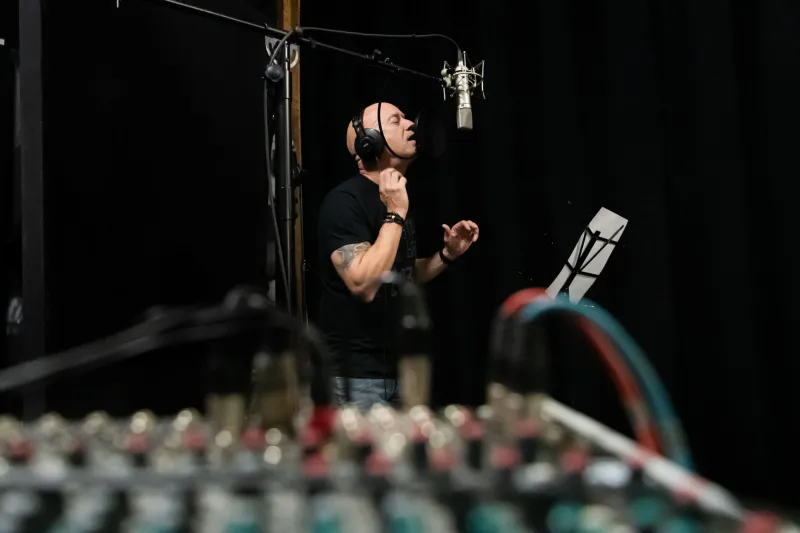
The studio is in Soho, up a staircase that smells faintly of coffee and old carpet, and by 9.15am there are four people standing in a semicircle around a single microphone. On the screen, a drama series is paused on a wide shot of a London market. Hundreds of extras. Bags of fruit. A bus groaning past in the background. None of it was recorded cleanly enough to use. That is why we are here.
‘Can we have the market at about seventy per cent?’ says the sound supervisor. ‘Not full chatter. More like a Tuesday. Slightly annoyed.’
The four performers nod, shuffle their feet, and then they are off — a low, overlapping wash of half-sentences, laughter, a shouted price, a scrap of argument about a parking space. It sounds like nothing. It sounds like everything. After twelve seconds, the supervisor says, ‘Lovely. Again, but less north.’ They do it again, softer, flatter, more London. Nobody says ‘cut’. Nobody claps. The screen moves on.
This is ADR loop work, and if you have watched British television or film in the last twenty years, you have heard it a thousand times without once clocking it. Loop artists — sometimes called walla groups, sometimes just ‘the crowd’ — are the uncredited voices who fill in the gaps after the cameras have gone home. They replace lost dialogue. They build background noise. They match regional accents that the original extras did not quite have. They make the world sound inhabited.
The bit your brain edits out
The strange thing about loop work is how invisible it is by design. A good loop group does not draw attention. It creates a texture that the audience accepts as real, then forgets. If the pub sounds wrong, you might not know why, but you will feel it. If the hospital corridor is too silent, the scene feels stagey. If the crowd at a football match is made of six people saying ‘rhubarb’ into a microphone, the whole thing collapses.
‘People think it’s just noise,’ says Frankie, a loop artist who has been doing this for eleven years and who asks me not to use her full name because the session is under an NDA. ‘But it’s rhythm. It’s restraint. You’re not performing a character. You’re performing a room.’
We are in a break now, and Frankie is cradling a mug of tea like it is a small animal. She has done loops for soap operas, big streaming dramas, a couple of films that went through Pinewood, and one very memorable advert for a car company that needed a convincing sound of a family argument in a service station. She fell into it, she says, after a decade of fringe theatre and a lot of voiceover auditions that went nowhere. A friend asked her to fill in on a crowd session. She has been busy ever since.
Not extras with microphones
The craft is harder than it looks. Loop artists have to watch picture and speak at the same time, keeping their voices under the dialogue but above the music. They have to breathe properly, because a loop session can run for three hours with short breaks. They have to invent tiny, believable snippets of conversation without ever landing on a line that distracts. And they have to be accent-flexible. A Manchester crowd is not a Bristol crowd is not a Glasgow crowd, and a good loop artist can shift between them without turning it into a party trick.
‘You’re basically doing four jobs at once,’ Frankie says. ‘You’re reading the room, you’re reading the picture, you’re keeping your voice steady, and you’re trying not to laugh at the person next to you who has just said “have you tried the pickle” for the ninth time.’
There is also the question of stamina. A crowd scene might need twenty passes: close, mid, distant, excited, subdued, angry, celebratory. The same four people have to sound like forty. They stand for hours. They drink a lot of water. They go home with a voice that feels like it has been dragged through a hedge.
The economics of an uncredited voice
Loop artists are usually paid a session fee, sometimes through Equity agreements, sometimes not. The work is rarely billed. You will not see their names in the credits, and they will not show up on IMDb for it. That invisibility is part of the deal — and part of the problem. When streaming platforms demand cleaner, more controlled audio, the demand for loop work goes up. But the people making it are still fighting for recognition, fair rates and basic protections.
This year, with UK productions busier than they have been in a while and global platforms needing every frame to sound immaculate, loop sessions are booking out weeks in advance. That is good news for the small pool of artists who do it well. It is also a reminder of how fragile the ecosystem is. There is no formal loop artist training route. Most people learn on the job. And with AI voice cloning now hovering over every corner of the industry, loop artists are asking the obvious questions: who owns the sound of a crowd? Who consents to it being synthesised? Who gets paid when the murmur is generated instead of performed?
Frankie is careful when she talks about it. She loves the work. She does not want to sound ungrateful. But she has watched other invisible crafts get squeezed before. ‘We’re not asking to be famous,’ she says. ‘We’re asking to be part of the conversation. If you’re using our voices to build the world, we should be in the room when you decide how that world gets made.’
The crowd disappears
By midday, the market scene is done. The supervisor thanks everyone. There is a brief debate about whether the bus needs a heavier diesel note. Someone makes a joke about the pickle line. Frankie packs her bag, checks her phone, and heads out into actual Soho, where the real crowd is doing what it always does: talking over itself, refusing to be clean, sounding exactly like the thing she has just spent three hours recreating.
You will hear her again next week, on a screen, in a pub, in a station, in a hospital corridor. You will not know it is her. That is the job. The crowd is a performance, and the best ones never ask for applause.