Cold Bacon, Warm Butter: A Week in the Prop Kitchen Where Nobody Eats
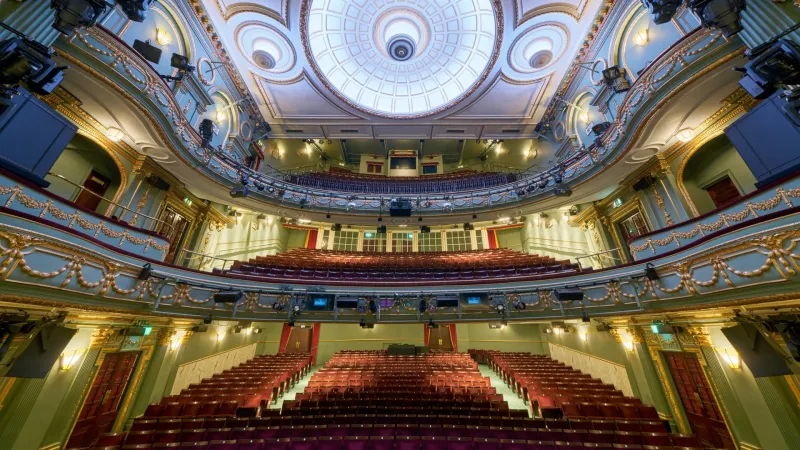
Photo: theatre prop food workshop kitchen, via seatplan.com
It is 7.42 on a Tuesday morning and Nadia is buttering a slice of toast that nobody will ever eat. The toast is cold — it has to be, because warm toast steams, steam fogs the camera feed on the monitor, and anyway the actor holding it has four lines and a half-turn before he puts it down. The butter is not butter. It is a pale yellow silicone compound, warmed slightly in her palm so it spreads like the real thing. She works it to the crust with a palette knife, steps back, and says: “Right. That’s breakfast.”
Nadia has been a prop maker for eleven years. Most of that time has been spent in railway arches and converted industrial units across south and east London, making objects that exist to be believed for ninety seconds and then forgotten. This week she is finishing a new musical at a 1,100-seat West End house: eight shows a week, a cast of twenty-two, and a running order that includes breakfast, a market scene, a funeral tea and one very tense dinner party.
The Shop That Isn’t a Shop
A prop kitchen is not a kitchen. There is a sink, a hob that works, and a fridge, but the fridge is full of things that would fail a food hygiene inspection on sight. There are acrylic ice cubes, a silicone roast chicken, four loaves of varnished bread and a tray of grapes that are not grapes. Nadia calls the Tuesday run “the shop”, but she is not buying food. She is buying readability.
“The audience has to know what it is from row Q,” she says. “A real apple reads as a dark blob under stage light. A prop apple has a slightly exaggerated shape, a slightly warmer colour, and a tiny bit of shine in the right place. It’s a cartoon of an apple, but only just.”
The bread comes from a theatrical supplier in Croydon, the fruit from a stall in Borough Market that sells to prop departments, and the toast — the toast is handmade. Nadia cuts it from upholstery foam, seals it with a flexible compound, then stipples the surface with a warm brown glaze. It takes her twenty minutes per slice. There are six slices in the show. She has made fourteen since previews.
The Continuity Bible (and the Photos Nobody Sees)
On the wall above her bench is a laminated sheet headed “KITCHEN — ACT ONE”. It shows every plate, bowl and glass in the show, photographed from above, with small arrows showing where each item sits. The tomato must be at four o’clock on the breakfast plate. The butter knife must point towards the audience. The napkin must be folded in a triangle, not a rectangle, because the actor folds it himself and he folds it the same way every night.
“If the tomato moves between Tuesday and Saturday, the audience won’t notice,” Nadia says. “But the stage manager will, because the actor will, because his muscle memory will. He’ll reach for it and it won’t be there. Then he’ll look down. Then the scene has a hole in it.”
This is the part of prop work that rarely gets talked about: it is not really about making things. It is about making things that behave identically, eight times a week, under hot light, in the hands of tired people. Nadia keeps a “bible” for every show — photographs, measurements, notes on which actor handles which item and how. For this production, page fourteen is a close-up of a gravy boat with the words “DO NOT POLISH” underlined three times. The glaze is meant to look slightly dull. The dresser kept shining it. They had words.
Allergens, Allergens, Allergens
The one thing that never appears in Nadia’s kitchen is real food that could go off. No dairy, no nuts, no shellfish, no gluten unless it is sealed, labelled and nowhere near an actor’s mouth. The production’s allergen matrix is stuck to the fridge door with a magnet shaped like a lemon. It lists every material used on stage, from the silicone butter to the tinted gel in the wine glasses, and it is reviewed before every preview.
“There’s a romantic idea that theatre uses real food because it’s more authentic,” she says. “It doesn’t. Real food is a continuity nightmare and an allergy risk. The only time we use real food is when an actor genuinely eats it on stage, and then it’s bought fresh, kept in a labelled box, and thrown away after the show. We made real chips once, for a director who insisted. Forty portions in a week. Every single one went in the bin.”
The gravy is a tinted gel. The wine is cold tea with a drop of caramel colouring, refreshed at the interval. The roast dinner — a Sunday lunch that appears in act two and is cleared in ninety seconds — is a set of painted foam pieces that slot together like a jigsaw. The Yorkshire puddings are biscuit and glue, painted with a gravy-coloured glaze. They look, under the warm wash of a stage light, absolutely delicious. They weigh almost nothing.
Eight Shows, One Lamb Chop
The lamb chop is Nadia’s favourite object in the show. It appears on a plate, is prodded by an actor, and is removed by a dresser. That is its entire job. But because it is handled so often, it has to be repainted every fortnight, and because it is repainted, it has to be matched to the original photograph, and because it is matched, Nadia has a small notebook of colour mixes going back to the first preview.
“It’s a bit of a joke in the department,” she says. “You spend three days on a lamb chop and then it’s on stage for eleven seconds. But if it looks wrong, the whole scene looks wrong. The audience might not be able to say why. They’ll just know the dinner table doesn’t feel real.”
On Wednesday there is a matinee and an evening show. On Thursday there is a press night. By Friday the toast has a small scuff on one corner, the gravy boat has a chip, and the grapes need a touch-up. Nadia works a five-day week, but show weeks are not really five days. She is in at 7.30, out by 6, and on call for the interval notes that come through from stage management.
Cleanliness Is Next to Believable
Every Sunday, the company does what Nadia calls “the prop wash”. The fruit gets a bath in warm soapy water, dried with a hairdryer on cool, and repainted where the varnish has chipped. The glasses are polished with a microfibre cloth. The bread is brushed. The toast is checked for wobble. It is not glamorous work, but it is the difference between a set that looks cared for and a set that looks tired.
There is also the smell. The show has a kitchen scene, and Nadia has been asked to make it smell like one. She has tried vanilla essence on a cloth, a drop of coffee behind the stove, and a small dish of cloves tucked under the counter. The audience can’t taste anything, but they can smell. It is the cheapest trick in the book and one of the most effective.
“People think props are about objects,” she says. “They’re about atmosphere. If the audience believes the breakfast, they believe the argument at the breakfast table. If they don’t, you’ve lost them before the second chorus.”
The Craft Is in the Detail (and the Detail Is in the Bin)
On Saturday night, after the second show, the toast goes back in its box. Nadia writes “TOAST — OK” in the log, next to a note about the gravy boat and a reminder to order more silicone butter. The audience files out into the rain, talking about the songs, the set, the actor who played the mother. Nobody talks about the toast.
That, she says, is the job. The best prop work is invisible. It is a cold slice of silicone, painted the colour of a warm morning, held for four lines and put down again. It is a lamb chop that nobody eats and a gravy boat that nobody fills. It is a small, quiet piece of craft that makes a West End world feel like somewhere real people live.
“I don’t mind that nobody notices,” Nadia says. “I mind when they notice. If they’re looking at the toast, something’s gone wrong.”
She switches off the bench light. The kitchen goes dark. Eight shows done, and the fake breakfast is ready for Monday.