Someone Has to Notice the Elbow: The Quiet Long Watch of a West End Dance Captain
Photo: Jenny Wren 64, CC BY-SA 4.0, via Wikimedia Commons
There is a moment, somewhere past the four-hundredth performance, when a dancer’s wrist does something the choreographer never asked for. It is tiny. It is probably invisible from row F. It might even look better. And that is exactly the sort of thing a West End dance captain is watching for.
Not because theatre should be frozen in amber. Because a long-running show is a living thing, and living things drift. The dance captain is the quiet editorial eye inside the company — the person who knows the difference between an interpretation and an accident, between a cover finding their footing and a step quietly going missing. When the show looks effortless, this is some of the work that made it look that way.
The job after the party
Opening night gets the photographs. The dance captain gets the Tuesday morning warm-up three months later, when half the company is nursing a cold, the swings are covering two tracks, and the stage management update has more notes than a school report.
In most UK companies, the dance captain is also a performer — often in the ensemble, sometimes a swing or cover. That duality is the point. They are not outside the show looking in. They are in the wings, in the quick changes, in the same physio queue as everyone else. They hear what people say at half-hour. They know which dancer is carrying an injury, which cover has not yet done the full lift in front of an audience, and which transition has started to acquire an extra beat because it makes someone feel safer.
That is not sabotage. It is human. But it needs noticing.
The show bible is a living document
Every long-running production has some version of a show bible: the choreography notes, the video, the spacing diagrams, the corrections that accumulated through previews. The dance captain helps keep it honest. They log changes. They film maintenance rehearsals. They write things down in the kind of language that makes sense at 10.30am on a Thursday: count in from the left, watch the upstage corner, do not let the second group rush the hand-off.
In 2026, that archive is often a messy little ecosystem of PDFs, shared drives, phone videos and a notebook that never quite leaves the building. The dance captain is the human search function. They can tell you whether the elbow was always meant to be there or whether it arrived during the week the original cast member was on holiday and nobody wanted to make a fuss.
Maintenance rehearsals are the least glamorous call on the schedule
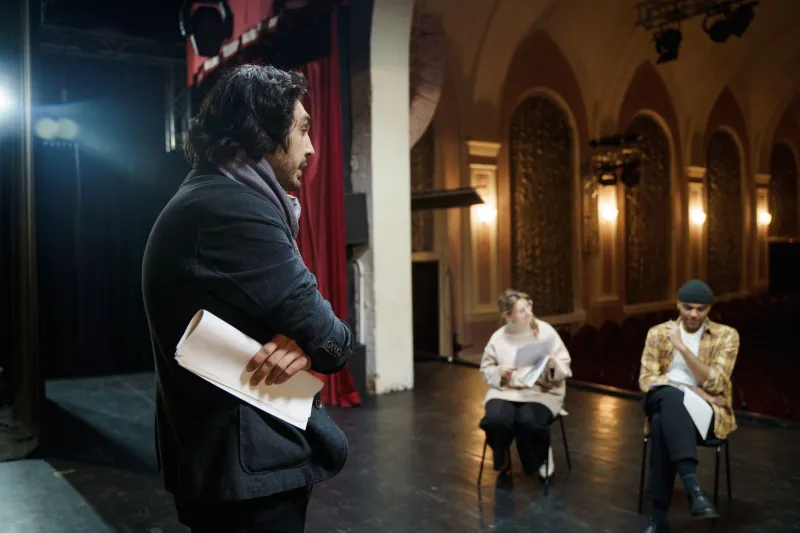
Nobody puts a maintenance rehearsal on a poster. It is usually a small room, a pianist or a backing track, and a company in leggings trying to remember what the show felt like before everyone got comfortable.
The dance captain runs the room. That means warm-up, notes, spacing, covers, transitions and the delicate business of telling a principal — someone with more Instagram followers and possibly more Olivier nominations — that they have started to anticipate a lift by half a second. Diplomacy is not a soft skill in this job. It is the job.
The best captains I have spoken to do not frame this as policing. They frame it as caretaking. The choreography is not a rule for its own sake; it is a set of choices that made the story land. If a step drifts, the story can drift with it. A joke stops landing. A threat stops feeling dangerous. A crowd scene starts to look like a queue for the bar.
Covers, swings and the kindness of repetition
A West End show does not stay the same shape because the same people do it every night. It stays the same shape because the people who are not on every night are rehearsed with care.
Dance captains spend hours with covers and swings: marking through tracks, walking spacing, talking through eyelines, rebuilding confidence after a missed rehearsal. It is repetitive, unglamorous and absolutely central. The audience does not know that the person playing the second lead on a Saturday matinee learned the part in a rehearsal room with a dance captain who kept saying, kindly but firmly, ‘again, but this time look before you turn.’
That is the quiet progressive argument for the role. Care and repetition are not the opposite of artistry. They are how artistry survives a long run.
When to call the creative team
A dance captain is not a director and not a choreographer. They are a custodian with a clear escalation route. If a change is about injury, access, fatigue or safety, it gets flagged. If a performer wants to make a genuine interpretation, it goes to the resident director or creative team. If a lift is being adapted because someone’s shoulder is not the same as it was in rehearsals, that adaptation needs to be documented, taught and checked — not left to memory.
The hardest judgment is knowing when a small change is protecting the show and when it is quietly rewriting it. That is the editorial eye. It is not about taste. It is about whether the production still means what it meant when it opened.
Why the effortless look takes work
Audiences are not supposed to see the maintenance. They are supposed to see the joke land, the lift soar, the ensemble move like one body. The dance captain’s name is rarely in the programme in lights. But when the show is nine months in and still feels sharp, still feels alive, still feels like the thing everyone fell in love with — that is not luck. That is someone noticing the elbow.