Trust, Then Contact: What UK Fight Directors Rehearse Before Anyone Throws a Punch
The first time a slap works in rehearsal, nobody claps. There is a small, unsatisfying pause. The fight director asks the actors to do it again, slower. Then again, from a different angle. Only when the move is boring — repeatable, measurable, almost dull — does anyone allow themselves to believe it might eventually look like violence.
That is the strange bargain at the heart of stage and screen combat in the UK. The audience wants to flinch. The performers need to be able to do it eight times a week, on tour, in a studio, on a wet Tuesday in Salford, without anyone actually getting hurt. The person holding that bargain together is the fight director: part choreographer, part risk assessor, part therapist for two actors who have to trust each other in inches.
The first call is a conversation
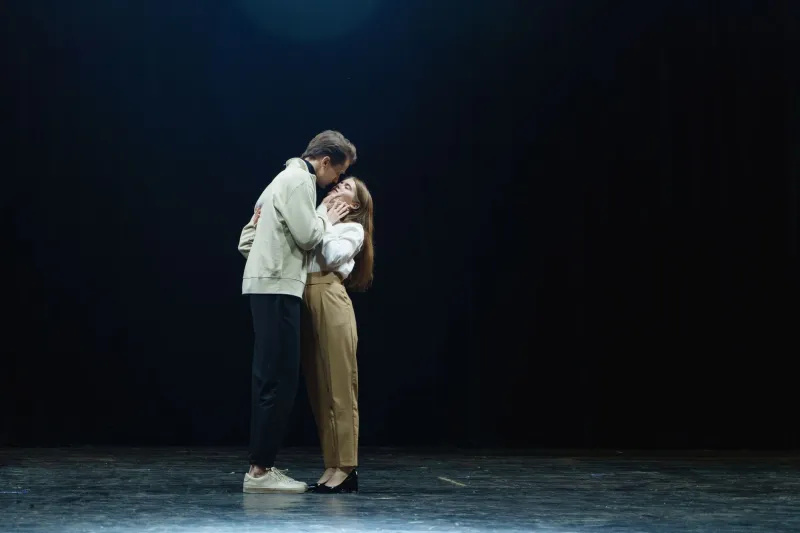
On day one, before anyone throws a punch, there is a conversation. What does the story need? Who has the power? Is this a slap that lands emotionally or a scuffle that lands physically? A fight director will ask about old injuries, glasses, hearing aids, pregnancy, anxiety, and whether either performer has been in a real fight they would rather not recreate. Consent is not a box-ticking afterthought. It is the blocking.
In UK theatre, that conversation sits alongside risk assessments and insurance paperwork, but the good fight directors make it feel human rather than bureaucratic. They watch how the actors stand when they are nervous. They notice who laughs first. They build a movement vocabulary that belongs to the characters, not to a generic idea of “fighting”. A kitchen-sink drama needs a messy scrap, not a swashbuckle. A musical might need a comic tumble that reads to the back of the balcony without turning into a stunt show.
Building the illusion in inches
The slap is a useful example because everybody thinks they know how it works. It does not work by missing. It works by agreement. The attacker’s hand travels on a fixed line. The receiver’s head turns on a cue. The sound — that horrible, satisfying crack — is often a clap, a footfall, or a slap against the receiver’s own body, timed to the millisecond. The audience sees the contact. The performers see the gap.
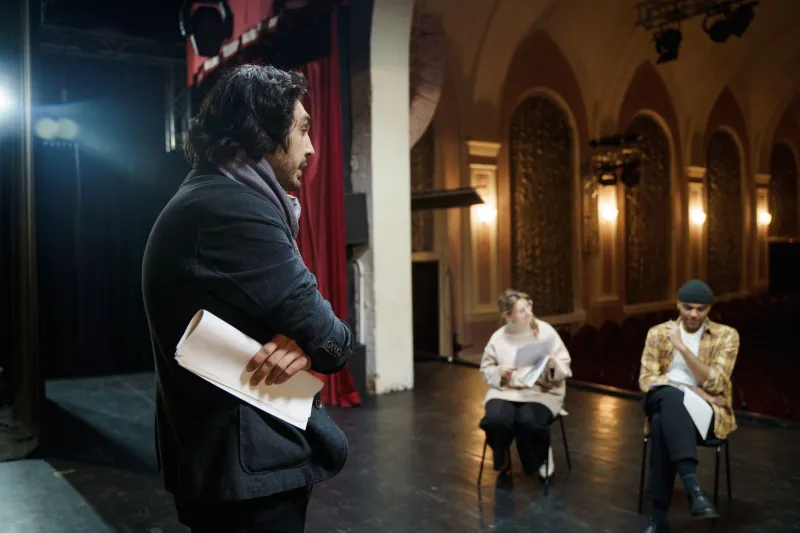
A fight call is where that gap gets maintained. In a regional producing house this autumn, the fight captain runs the call before the half. The actors walk the sequence at quarter speed while stage management watches the spacing. Then half speed. Then full. The fight director is not always in the room by week three, so the company has to own the choreography. That is the point: the fight belongs to the performers, not to a visiting expert who disappears after press night.
What surprises people is how much of the work is about feet. A punch is not a punch; it is a step, a hip turn, a shoulder, and finally a hand that arrives exactly where the other person expects it. A fall is not a collapse; it is a controlled descent with a landing plan. Sword fights are long conversations about distance. The drama comes from the near miss, and the near miss only works if both performers know precisely where “near” is.
The paperwork behind the punch
There is a progressive argument to be made about fight choreography, and it is not about censoring violence on stage. It is about making the conditions visible. A performer should be able to say “not that close” without fearing they will be labelled difficult. An understudy should get the same fight call as the lead. A swing covering three roles should not be expected to absorb a complicated grapple from a video on a phone. Safety is not the enemy of drama; it is what allows drama to be repeated.
Many UK fight directors train through organisations such as the British Academy of Stage & Screen Combat, and Equity has long pushed for proper recognition of the work. But the culture matters as much as the certificate. The best rooms are the ones where the director, stage management and fight team talk to each other early. Where intimacy coordinators and fight directors are not treated as rivals but as colleagues with overlapping expertise in consent and choreography. Where a risk assessment is a living document, not a laminated prop.
Opening night and the maintenance of danger
By opening night, the fight has become a ritual. The performers warm up. They check the floor. They walk the sequence. They remind each other where the light is, where the set edge is, where the quick change begins. The fight captain gives notes. Someone makes a joke. Then the call goes out, the house lights dim, and the same carefully built illusion gets handed to an audience that has no idea how much counting is involved.
Afterwards, there will be another fight call before the next show. There always is. Violence on stage is not a moment of spontaneity; it is a small, disciplined machine that has to be serviced. The performers look dangerous because they have agreed, in advance, to be safe. The audience flinches because the trust is invisible. That is the trick — and it is worth watching twice.