Please Take Your Seats: The Five-Minute Job That Sets a Theatre’s Temperature
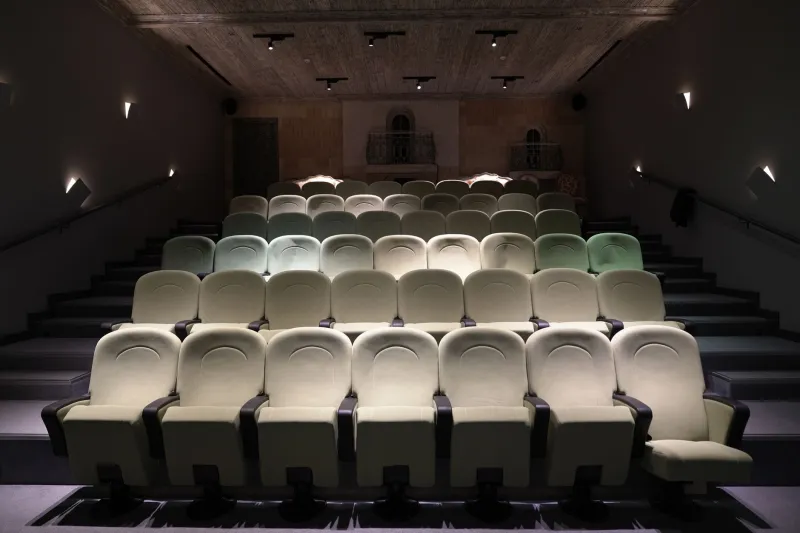
At 7:25pm in a UK theatre, the house lights are still halfway up and the audience is doing that pre-show shuffle: coats off, sweets opened, phones checked one last time. Then a voice comes over the PA. It is warm, unhurried, slightly amused. It welcomes everyone, mentions the running time, asks for phones to be silenced, explains where latecomers will be seated and reminds anyone who needs it that the front-of-house team is there to help.
It sounds effortless. It is not.
It starts as a list of don’ts
The pre-show announcement is one of the most carefully written pieces of text in the building, and almost nobody claps for it. It has to cover safety, access, latecomer policy, content notes, photography rules and the small matter of asking several hundred people to behave themselves without making them feel like they are back at school.
‘You are trying to hold about seven different responsibilities in one voice,’ says a duty manager at a mid-scale receiving house in the North West. ‘You want people to feel welcome, but you also need them to listen. You want to be warm, but you cannot be so chatty that the safety information gets lost.’
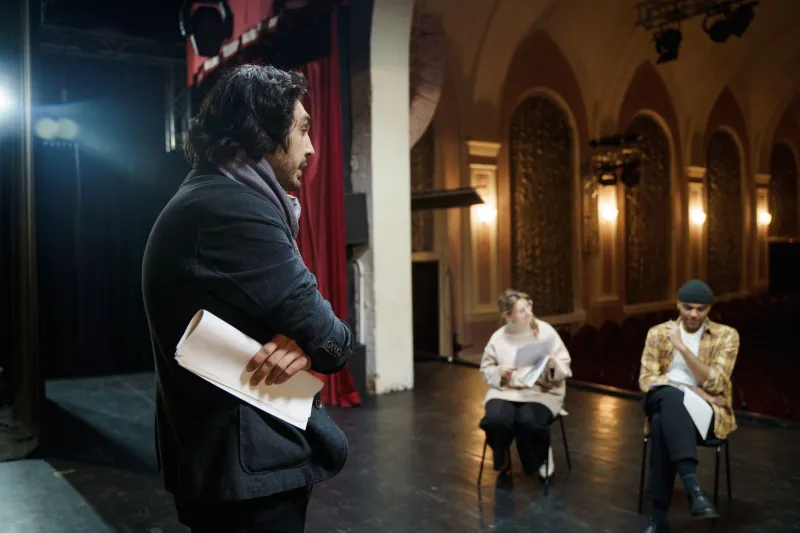
The emergency announcement — the one about alarms and exits — is usually a fixed script and is not up for creative rewriting. The pre-show welcome is different. It belongs to the venue, the show and the audience all at once. In producing houses, it is often delivered by the company manager; in receiving venues, it frequently falls to the duty manager. For concerts, comedy and some one-person shows, a performer might do it themselves. Either way, someone has decided what gets said, what gets cut and how it should land.
The person behind the voice
There is no drama school module called Pre-Show Announcements. Most people learn by shadowing someone else, then finding their own rhythm. The microphone is not a pulpit. The best deliveries sound like a person talking to a room, not a tannoy issuing instructions.
‘You are performing, but it is not a performance,’ says a company manager who has toured with mid-scale productions across the UK. ‘If you try to be funny and it does not land, the room goes cold. If you are too formal, people switch off. The trick is to sound like you are glad they came and that you know what you are doing.’
That means inclusive language matters. ‘Good evening, everyone’ is more common than ‘ladies and gentlemen’ for good reason. It also means being precise about access: step-free routes, hearing loops, relaxed-performance protocols, captioned nights, the fact that audience members can leave and re-enter if they need to. Access information is not an add-on to the announcement. It is part of the show’s contract with the room.
Latecomers and the delicate art of the hold
Latecomer policy is where the pre-show announcement earns its keep. Front-of-house staff cannot simply open the door mid-scene. The duty manager liaises with stage management and finds a safe point — a scene change, a blackout, a music cue — to seat people with as little disruption as possible.
The announcement can make that feel like care rather than punishment: ‘If you are joining us late, our front-of-house team will show you to a seat at the right moment.’ It tells the audience what is happening, stops the door from becoming a flashpoint and protects the performance for everyone already inside.
‘It is not about being strict,’ the duty manager says. ‘It is about not wrecking the show for the people who arrived on time, and not humiliating the people who did not. You are holding the room’s mood in your hands for about ninety seconds.’
The phone sentence
Every venue has its own version of the phone request. Some go for gentle: ‘Please take a moment to silence your phone — not just vibrate, if you can.’ Some go for lightly threatening: ‘If your phone rings, we will assume you are very popular and ask you to step outside.’ Panto can get away with a joke about being invited on stage. A verbatim docudrama about a real tragedy cannot.
The tone has to match the show without stepping on it. A comedy might want a bit of mischief. A dance piece might want calm and spaciousness. A show with strobe, haze or gunshots needs the content warning delivered clearly, not buried under a gag. The best announcements sound spontaneous, but they are timed to the second.
What gets cut
Ask anyone who writes these scripts and they will tell you the same thing: audiences stop hearing after about forty-five seconds. Every extra sentence dilutes the ones that matter. So the draft gets trimmed. The bar plug goes. The long list of programme credits goes. The fifth reminder about the cloakroom goes. What remains is the useful stuff: welcome, phones, latecomers, access, content notes, enjoy the show.
‘We do not read the whole programme,’ the company manager says. ‘We are not there to sell the interval drinks. We are there to set the temperature. If people remember the announcement at all, I want them to remember that they felt looked after.’
The voice as hospitality
The pre-show announcement is front-of-house dramaturgy. It tells an audience what kind of evening this is going to be. It can calm a room before a challenging piece, signal that a relaxed performance really is relaxed and make a first-time theatregoer feel less like they have wandered into a private club.
At 7:29pm, the voice returns: ‘Please take your seats. This evening’s performance will begin in five minutes.’ The room shifts. Conversations wrap up. Coats are folded. Somebody’s phone buzzes one last time and is silenced. The voice puts down the microphone and goes back to work.
No applause. No curtain call. Just the quiet five-minute job that makes the whole evening possible — and makes a theatre feel less like a building and more like a room full of people who have agreed to look after each other for a couple of hours.