The Piano Is a Witness: Inside the Rehearsal Room Where a West End Show Learns to Breathe
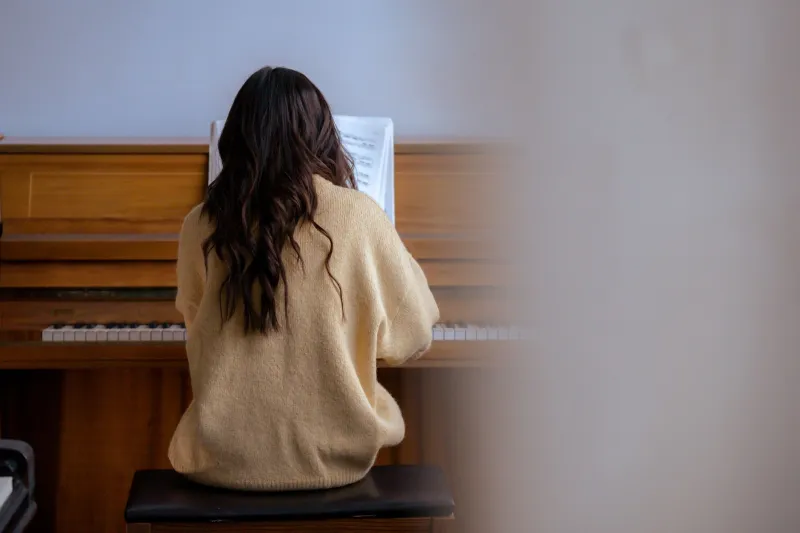
The room smells of coffee, dance floor and fresh photocopying. It is a little after ten on a grey London morning, and the rehearsal pianist is already doing the thing audiences never see: making a show exist before it properly exists. There is no orchestra pit yet. No wigs on stands. No front of house. Just a piano, a stack of scores covered in pencil, and a company of performers waiting to find out how the day will sound.
She plays the first number while the director talks over the top of it. Then she plays it again, slower, while a swing walks through a harmony they have not yet sung in public. Then she plays it a third time, in a different key, because someone has asked whether the belt feels better a tone down. Nobody claps. That is not what this piano is for. It is there to hold the room steady while everyone else works out what they mean.
The score is a rumour until it is played
A rehearsal pianist in a UK musical is not simply accompanying a singer. They are reading a living document. The score in front of them may be marked up with cuts from Tuesday, new transitions from Wednesday and a choreographer’s note from this morning. A number that ran four minutes in the workshop might now have a shorter intro, a longer vamp and a key change that exists only because a producer asked a question in a meeting nobody else attended.
The pianist turns all of that into something the room can respond to. They have to be fluent enough to make the messy middle feel intentional, and humble enough to change course mid-bar. When a director says, ‘Can we just try it with a bit more lift?’, the pianist has about three seconds to decide whether that means faster, brighter, louder, or all three with a different bass line. It is technique, yes. But it is also translation.
Transpose, please. And then transpose again
Ask any rehearsal pianist about their day and the word ‘transposition’ arrives quickly. A performer may be tired, pregnant, recovering from a cold or simply discovering that the phrase sits better elsewhere in their voice. The pianist shifts the whole thing. Then shifts it back. Then shifts it a semitone for the alto in the corner who has not yet sung the line with the company.
On a touring production, that skill becomes even more visible. A regional theatre may have a different acoustic, a different piano and a different set of bodies in the room. The pianist becomes the fixed point. They cover absent orchestra parts with one hand, suggest a string line with the other, and keep the rhythm section alive in their left foot. It is not a performance. It is a service. But it is also a seriously athletic bit of musicianship, done in full view of people who are allowed to stop and ask for it again.
Diplomacy at tempo
What makes the job tricky is not only the notes. It is the room. A rehearsal studio contains several competing needs at once: the director wants clarity, the musical director wants accuracy, the choreographer wants a pulse, the performers want reassurance, and the stage management team wants to know when the next break is. The pianist sits in the middle of all of it, playing through it.
You can tell a lot about a rehearsal pianist by how they handle a request that is really a feeling. When someone says the number feels ‘stuck’, they might not mean tempo. When a performer asks to hear the accompaniment ‘more simply’, they might be asking for space. The pianist learns to hear the question underneath the question. That is the diplomatic bit. It is also why the good ones are valued so fiercely by companies, even if their names rarely make the poster.
The orchestra in one pair of hands
Later in the afternoon, the room fills with swings and covers who need to hear how their track fits against everything else. The pianist becomes a one-person orchestra, but not a showy one. They thin out the texture so a vocal line can be heard. They lean on the bass when the choreography needs a landing. They stop dead when the director raises a hand, then pick up exactly where they left off, as if the pause were written in.
This is the unglamorous heart of how a West End or touring musical gets built. Not in a flash of inspiration, but in repeated, adjustable, generous playing. The pianist is a witness to every version of the show that will never be seen. They hear the joke that gets cut, the ballad that moves from act two to act one, the dance break that loses eight bars because the set change needs the time. They keep the memory in their hands.
By the time the company calls a wrap, the score is more scribbled than it was at ten o’clock. The pianist packs up her pencils, checks the next day’s schedule and leaves the upright where it stands. Tomorrow the room will ask something new of her. She will read it, transpose it, soften it, drive it and make it sound as if it was always meant to be there. The audience will never know her name. The show will carry her fingerprints all the same.