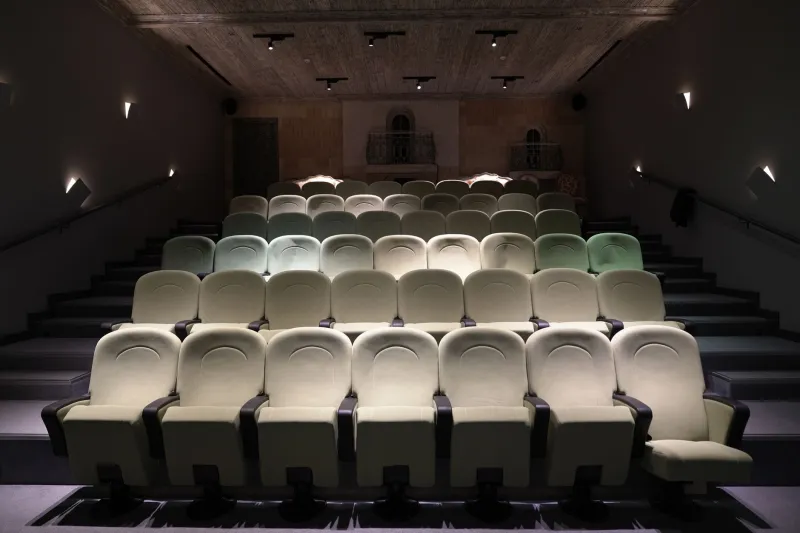
Eight Shows, One Hairline: The Quiet Ritual of a West End Wig Master
Photo: Wurts Bros. (New York, N. Y.), photographer; Neville & Bragge, architect, Public domain, via Wikimedia Commons
The wig room smells of hairspray, tea and the faint electrical warmth of curling tongs. It is 5.15pm on a Tuesday, which means the half has been called, the audience is beginning to fill the foyer, and Nadia is standing in front of a row of polystyrene heads with a look of mild, focused suspicion.
'That one's lying to me,' she says, lifting a dark lace-front wig from its block. 'It looked fine last night. Now the left temple is doing something it shouldn't.'
Nadia is a West End wig master. She has asked me not to use her full name, partly because she is freelance and partly because the job is better described than named. For the past six years she has looked after the hair of a long-running show in London — fitting, pinning, repairing, washing, restyling and occasionally negotiating with a performer who has decided, at 7.25pm, that the fringe feels 'a bit loud'.
What the audience sees is a character. What Nadia sees is a schedule.
The room where the character sleeps
A wig room is not a dressing room. It is closer to a workshop with mirrors. There are shelves of blocks labelled with character names rather than actors' names, because the wig belongs to the role. There are tins of pins, packets of lace, pots of knotting needles, steamers, hairdryers, colour swatches, and a laundry basket that never stays empty. There is also, in Nadia's room, a small framed photograph of her grandmother, who was a hairdresser in Leeds.
'She taught me that hair is never just hair,' Nadia says. 'It's a signal. It tells you who someone is before they speak.'
In a play or musical, that signal has to survive sweat, quick changes, dancing, hat-wearing, humidity, stage lights and the occasional enthusiastic hug from a co-star. A wig can be made by a specialist workshop, but it is kept alive by the person who dresses it nightly. Nadia calls this 'the boring miracle'.
The fitting is a conversation
Before every performance, each wig is checked, brushed, pinned and fitted. The fitting is not a quick hello. It is a conversation between hand and scalp. Nadia knows which performer has a sensitive crown, which one gets headaches if the lace is pulled too tight, which one has a wig cap that rolls, and which one needs a five-second adjustment during the interval or they will feel it for the whole second act.
'You learn a head,' she says. 'You learn how someone moves. You learn when they're nervous because their hairline gets warm.'
There is trust in this. A performer sits down, hands over their face, and lets someone else decide how they will look. For a wig master, that means being calm, quick and honest. If a wig is sitting badly, you do not tell the actor it looks great and hope the lighting will hide it. You fix it.
'It's like being a stage partner who never gets a bow,' Nadia says. 'Except I do get a bow. I just get it in the wings, in the dark, with a pin in my mouth.'
Eight shows, one hairline
Consistency is the hard part. A long-running show asks the same visual question every night: can you make this character look like they did yesterday? Not identical, exactly — theatre is live — but close enough that the audience never spots the join.
The enemies are ordinary. Sweat lifts lace. Dance numbers shift pins. A hat can flatten a front. A quick change can turn a carefully set wave into a rumour. Nadia's job is to anticipate all of it. During the show she watches from the wings, not as a critic but as a mechanic. She sees a hairline start to lift and knows she has four minutes before the next entrance. She sees a performer scratch their head and makes a note for the interval.
'People think the wig is the character,' she says. 'It's not. The wig is the contract. The character is what the performer does underneath it. My job is to make sure the contract doesn't slip.'
The invisible labour
Wig work is a craft with a long memory. It includes knotting hair into lace, ventilating a front, colour-matching a root, stitching a weft, washing and blocking, setting and steaming. It also includes crisis management. A wig can be dropped, crushed, rained on, or — in one memorable case Nadia will not fully describe — returned from a stage fight looking 'like it had lost an argument with a hedge'.
The industry talks a lot about talent. It talks less about conditions. Nadia is freelance, like many backstage specialists, and she is clear that the job only looks effortless because someone is doing the unglamorous bits: the late-night washes, the early fittings, the repair that takes two hours and never appears in a programme.
'It's not magic,' she says. 'It's labour. I just happen to love it.'
Curtain down, work continues
After the show, the wigs come off. They are cleaned, re-blocked, dried, brushed and left to rest. Nadia writes notes for the next day: fringe slightly left, pin at nape needs replacing, check lace on the second wig before the matinee. The room goes quiet. The character goes back on the shelf.
Tomorrow, at the half, Nadia will pick up the same wig and start again. She will check the temple, fix the lie, pin the lace, and send someone out into the light looking like they were born with that hairline. The audience will not notice. That is the point.
'If they notice the wig,' she says, 'I've had a bad night. If they just believe the person, I've done my job.'