Greasepaint and Reflexes: Inside Britain’s Unlikeliest Performance Bootcamp
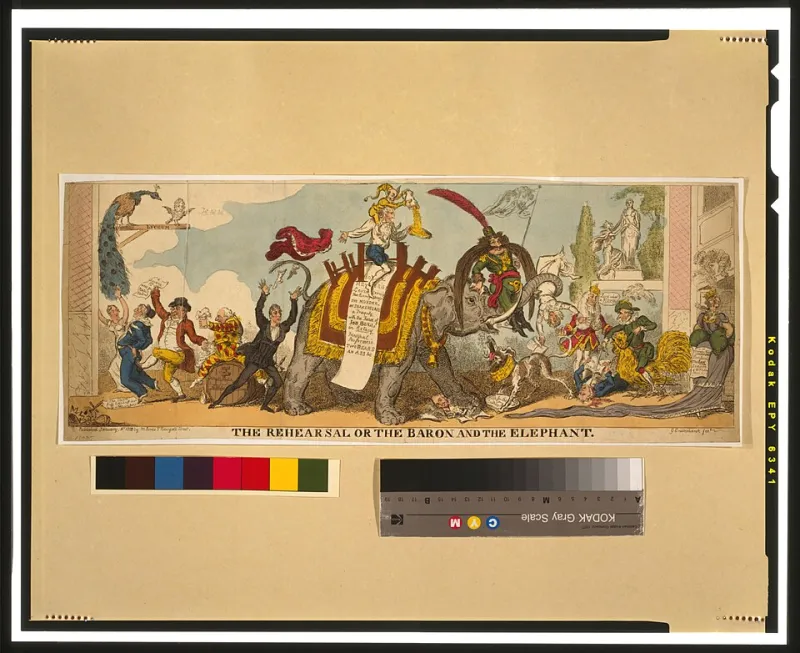
Photo: British Cartoon Prints Collection, Public domain, via Wikimedia Commons
Late October is when the emails start flying. By the time you read this, rehearsal rooms from Dundee to Plymouth will be full of performers learning dance routines, dodging foam pies and pretending, with total conviction, that a man in a frock is their mother. Panto season is back for 2026, and with it comes the annual ritual of people who never go to the theatre sneering at the ones who do.
I get it. On paper, panto looks like the opposite of serious acting: singalongs, slapstick, a celebrity from a soap wandering on in a sparkly coat. But spend an afternoon in a regional theatre during tech week and you’ll see something else entirely. You’ll see actors doing the hardest live-performance workout Britain has to offer, and loving it.
The audience is not a backdrop — it’s a scene partner
Screen acting is largely about control. You hit the mark, you find the light, you pitch the line so the boom doesn’t clip. Panto is about surrender. The room talks back. A child will ask why the villain is sad. A hen party will finish your punchline for you. A grandmother will correct your geography. You cannot cut, reset or ask for another take. You absorb the noise and keep the story moving.
One actor I know spent years doing guest leads on telly before taking a panto in Sheffield a few seasons back. He told me the first week was humbling. He thought he knew comic timing, then realised he’d been playing to a camera operator and a boom op. By week three he could feel a laugh coming before it landed. That’s not magic. That’s thousands of micro-adjustments, night after night, in front of a paying crowd.
Eight shows a week is a fitness test with jokes
Panto runs through Christmas and into January, often with two-show days and a schedule that would make a marathon runner wince. There are quick changes, stairs, trapdoors, water pistols and dance numbers that require actual cardio. The voice has to survive pantomime dame screech, villain laugh and a final song that goes up a key just to be cruel.
What fans don’t see is the maintenance. Vocal warm-ups in stairwells. Ankle tape. Echinacea. The swing who knows every track and sits in the wings ready to go on. The stage management team quietly moving a piece of set that has started to wobble. Panto looks chaotic because it is built to look chaotic, but the chaos is meticulously rehearsed.
It is also one of the few forms where actors learn to pace a whole month, not just a scene. Screen work is stop-start. Panto is a long, loud haul. You learn where to spend energy and where to save it, how to keep a joke fresh on a Tuesday matinee when the front row is mostly five-year-olds and the back row is mostly grandparents. That’s craft.
The save is the real skill
Something will go wrong. A prop will fail. A trapdoor will stick. A child will wander on stage and refuse to leave. The skill is the save: the ad-lib, the look, the tiny piece of business that turns a disaster into a bit. The best performers make it look like part of the show, then get the story back on track before anyone notices.
The ‘ghost gag’ — the front-cloth routine that covers a scene change — is a masterclass in this. It’s improv with a safety net made of other people. You have to be funny, family-friendly and fast, while stagehands shift a castle behind you. Screen actors retrain their instincts for panto. They learn that the fourth wall is not a wall at all, but a conversation.
Why they keep coming back
Money matters, obviously. A long panto run can be a financial anchor in a freelance year. But ask the cast and the answers are more interesting. They come back for the audience, for the ensemble, for the weird alchemy of a room full of people who have decided to have a good time together. Regional theatres are where you meet the people a streaming algorithm will never introduce you to.
Casting directors watch panto too. Not just for the celebrity names, but for the actors who can hold a room, land a joke and recover when the scenery falls over. It is one of the few British forms where working-class families, kids, teenagers and older audiences share the same space. That’s not a small thing in 2026, when so much culture is siloed by taste and price.
Let’s not romanticise the conditions, though. Long runs are exhausting. Childcare is a nightmare. Pay varies wildly. The best companies build in vocal rest, access support and proper safeguarding, because a happy cast is not a luxury — it’s how you get a good show. The worst companies rely on goodwill and cough sweets. We should talk about that as loudly as we talk about the frocks.
So when the lights go up on another ‘Oh no it isn’t’ this winter, watch the people on stage a little differently. Watch the timing. Watch the recovery. Watch the stamina. Panto may be Britain’s silliest export, but it is also one of its most rigorous acting schools. Just don’t tell the kids. They think it’s just funny.