The Clock Starts at Half: Inside the Backstage Countdown That Makes a UK Curtain Up
At 7pm on a Thursday in 2026, a West End house looks empty from the street. Inside, the half is already moving. For a 7.30 curtain, the call goes out over the tannoy at 6.55: ‘This is your half, ladies and gentlemen.’ It sounds like a warning. It is actually a handover. Stage management is passing the building to the company, and the company is passing itself to the show.
A contract, not a countdown
The half is thirty-five minutes, but it is not a countdown in the ordinary sense. It is a contract. The deputy stage manager checks the sign-in sheet. The company manager watches the door. The technical team confirms the set has been reset after the matinee, that the props are where they should be, that the quick-change rails are stocked and the safety checks are signed off. On a two-show day, the half is the bridge between one exhausted audience and the next.
For performers, the half is where the day stops being admin and becomes theatre. It is where a note from the director stops being an email and becomes a physical instruction: lift the arm earlier, take the laugh later, breathe before the second verse. It is where a wig that felt wrong at the matinee gets pinned again. It is where the company remembers, collectively, what the show is supposed to feel like.
Fight call, wig check and the choreography of care
In a West End company, the half often begins with a fight call. Stage combat is rehearsed at speed but not at full force, with the fight director or a fight captain watching. It is not glamorous. It is repetitive, careful and absolutely non-negotiable. A missed parry in rehearsal is a bruise; a missed parry in performance is an incident report.
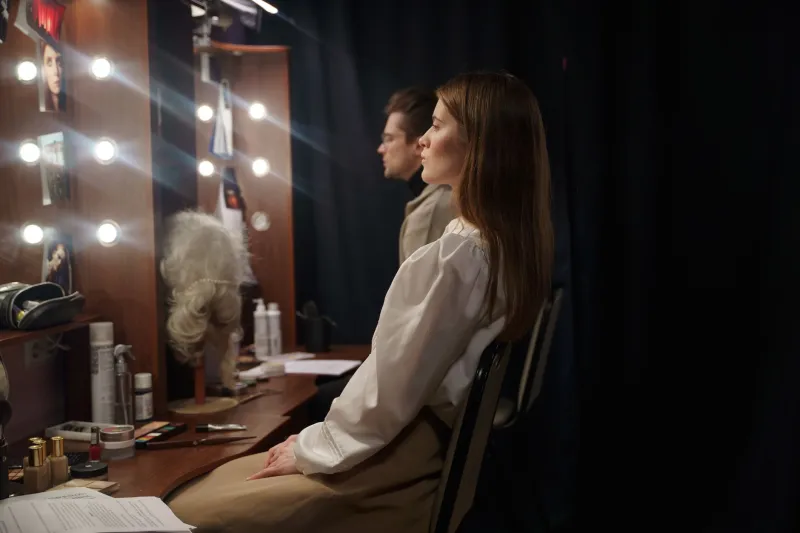
Then come the wig checks, the makeup touch-ups, the quick-change run-throughs for anyone whose costume has more than one life. A dresser might have fourteen seconds to move a performer from a ballgown to a battle jacket, and the half is where that fourteen seconds gets rehearsed again, in shoes, with the actual pins. For a touring ensemble, the half is different because the building is different. The rake is steeper here. The wing space is narrower there. The half is where a company learns the geography of a new stage before an audience arrives to watch them get it wrong.
This is also where care work happens. An intimacy coordinator might check in before a scene that carries weight. A company might honour an access rider by protecting a quiet room or adjusting a warm-up. A stage manager might notice that a performer is moving slowly and ask a question that is not really about the schedule. The half is where the industry’s better instincts get a chance to operate before the pressure of performance takes over.
The quiet brain
There are superstitions, of course. Some performers will not whistle backstage. Others will not say the name of the Scottish play, or will say it and then perform the required theatrical penance. A lucky mug might sit on the same shelf it has sat on for years. A particular pair of socks might be considered load-bearing. These rituals are easy to mock and harder to replace. They are small anchors in a job where the variables are enormous.
But the half is also mental health work. The best companies treat it as a place where a performer can say ‘I am not okay’ before curtain up, and where someone can respond without turning it into a crisis. In 2026, with schedules running hot and touring costs still biting, that space is under pressure. The half can become a rush if the building is short-staffed or the get-in has overrun. When it does, everyone feels it. The show may still happen, but the company arrives at the first cue already running on empty.
The invisible labour of the understudy and the swing
The half is especially vital for understudies and swings. They may not be on tonight, but they are often in the building, running lines, checking blocking, walking the stage before the set is fully dressed. A swing might cover three roles across the week and need the half to remind their body which track it is on. An understudy might go on at ten minutes’ notice because someone has gone down with a virus. The half is where that possibility is kept alive — not as a romantic idea, but as a practical, repetitive, deeply unglamorous discipline.
Audiences never see this. They see the curtain rise, the lights hit, the first line land. What they do not see is the stage manager checking the beginners’ call, the dresser doing a final zip, the actor taking one last breath in the wings. They do not see the half ending.
Curtain up is the second act
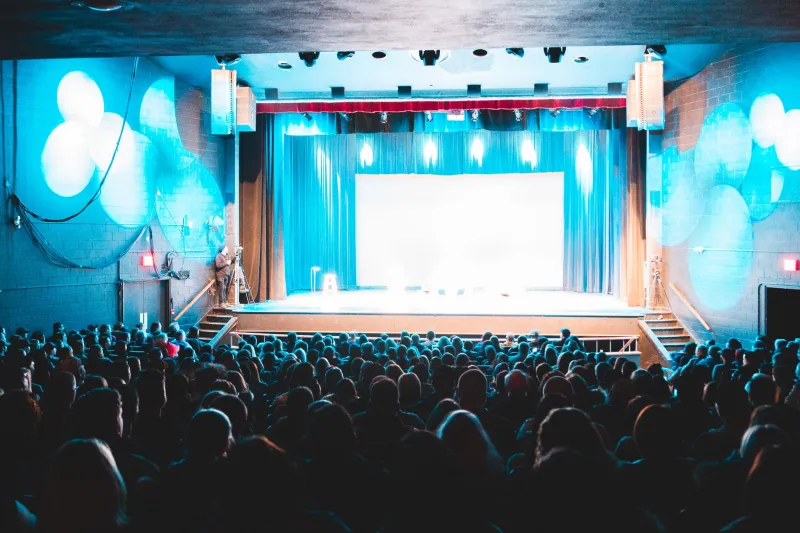
By 7.28, front of house is filling. The bar is busy. Someone is still finding their seat. Backstage, the company is gathered in the wings or at the stage door, quiet in the way that only a working theatre can be quiet. The stage manager calls beginners. The half is over. The show begins.
But the half was never just preparation. It was the first act of the night, performed to an audience of colleagues. It was a contract, a care plan and a small act of collective faith. That is why it remains one of British theatre’s most sacred habits — not because it is mysterious, but because it is made of labour, attention and the simple decision to look after each other before the lights come up.